Open-Source DIY Satellite Ground Stations

We are working on making it somewhat easier to contact a satellite from home, as we progress our own satellite base station design and instructions for contacting our experimental Emergency Communication Satellite Launched June 23, 2025 @ 2:19pm PST designed to broadcast when cell networks are down on LTE channel 32. This page serves as a guide overview for some of the options.
If you'd like to see where our satellite is right now click here!
During the testing phase, further details on contacting the satellite are in the satellite project (Donors only link).
Communicate with Satellites from Home
Aim manually with a handheld antenna (photos to come)
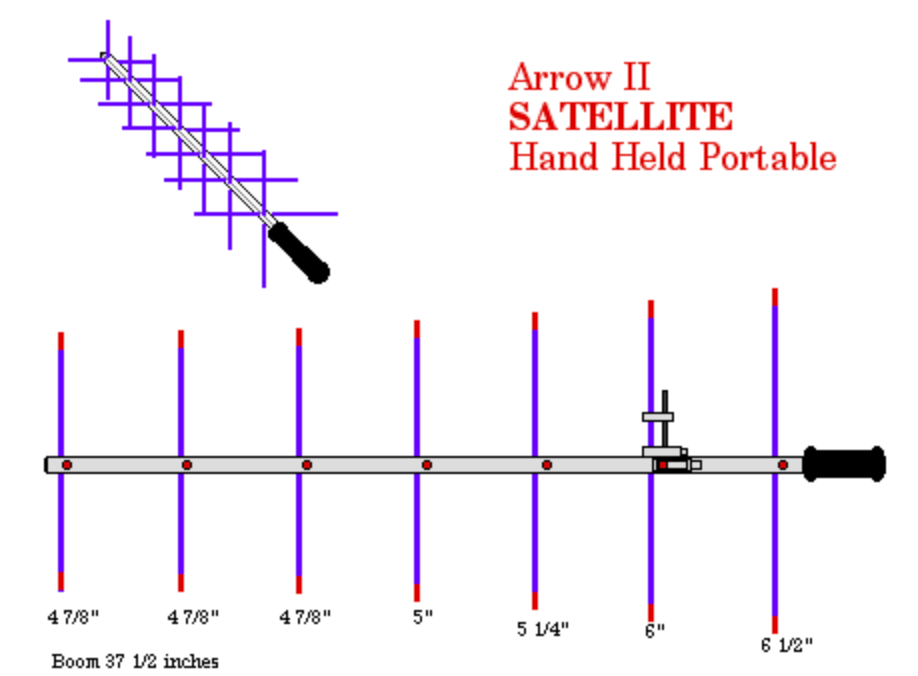
One portable method is learning to manually listen to satellites using a hand pointed antenna using a handheld UHF Radio. In our case we suggest the $142 arrow 2 (split-boom without duplexer that fits in the roll up bag), connected to an inexpensive portable handset UHF radio by $25 Baofeng or similar. Since its UHF you can leave the long bars off the antenna and the antenna is quite portable in its roll up bag, and can be used for other purposes.
Bonus: If you plan to go to subsequent steps and invest in a rotator, you may wish to pick a more expensive radio which is compatible with Hamlib or similar for computer control of the radio and rotator.
Build a simple UHF tracking ground station (photos to come)
This system lets you follow and monitor satellites on UHF bands using TinyGS
It requires
- a different less portable Arrow 2 Antenna $142 (but you could use any of these)
- a Discovery rotator (soon to be released) co-designed by one of volunteers
- a $22 433mhz LoRA board from Amazon (see other options but needs to be 433)
We will produce a full write up with photos when finished. This system is also capable of transmitting control instructions to the satellite.
If you'd like to track non UHF satellites, use SatNOGS for a more complex system. See a paper comparing TinyGS and SatNogs here.
Mini-Uplink Ground Station
We have also scoped open source inexpensive ground station designs using (for example) Discovery rotator and Discovery Dish which via volunteers we could in theory deploy across several countries and regions to increase our upload capacity to the satellite over L-band, or use to receive content.
This design would in principle allow satellite relay based ground station to ground station and ground station to cell phone communication without the internet.
Separately you can pair this inexpensive hardware with a cheap software defined radio and do lots of other interesting things.
Mobile Uplink Terminal
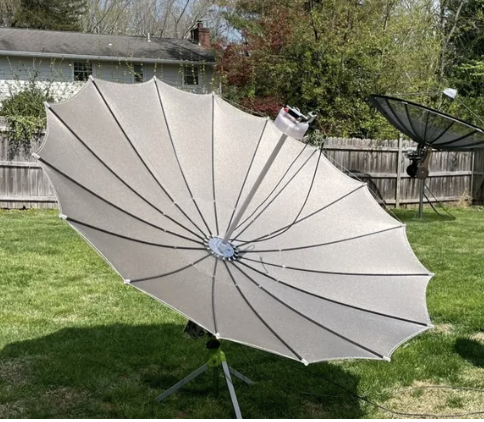
This is sits between the mini and full uplink but uses a collapsible fabric dish from sublunar easily stowable in a vehicle or garage for large upload and download on L-band.
Full-Sized Ground Station Tutorial (use to build a data uplink node)
Use this document to learn more about the process for doing more complex builds - in our case for reliable UHF, SDF control signaling, and higher bandwidth data transfer on our L-band spectrum. See a full list of Software-defined Radios.
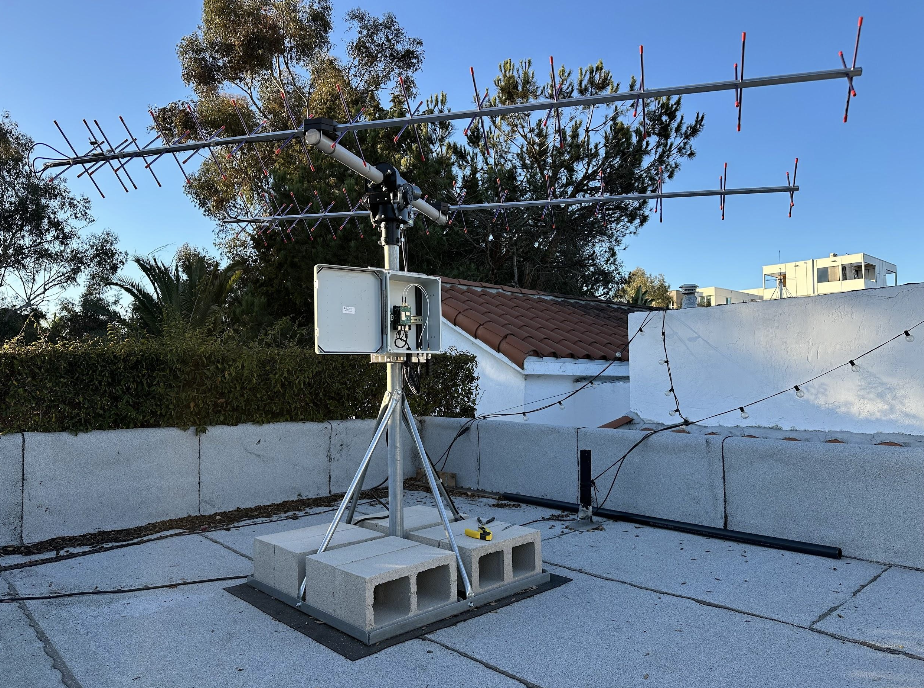
Our ideal design has two large Yagi antennas for UHF and a 2-6 meter central dish (for L-band) on a rotator. (smaller version shown without central dish)
Build a Satellite Test Environment
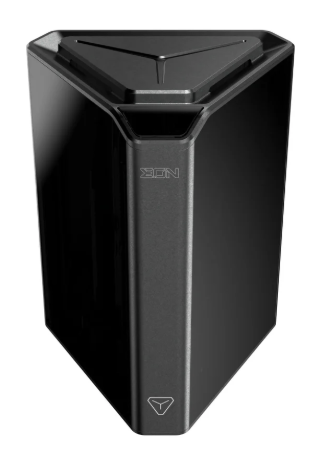
We created a device to emulate our satellite's onboard processor which is made from a Raspberry Pi 4B 8GB and a Lime Micro SDR Mini enclosed in an excessive Argon EON case along with onboard drive of similar speed.
Build a test cell tower that can broadcast across your room
You can create your own cell tower using one of several open source software stacks for example Open5GS. In our case we began with SRS-RAN, and a Blade RF Micro SDR connected to a Raspberry Pi mini computer, but you can use any SDR listed here. You'll need to sort out e-sim cards and such on your phone, but for testing its best to simply have a second SDR and Raspberri Pi. There are also things like Libre Cellular. In the future we are there are emerging standards in Narrowband IoT which could be idea.
Become a node in a Mesh Network!
Now that you have the ability to listen to or broadcast to satellites and the radio world, consider linking to mesh and emergency networks such as our grantee Meshtastic. Check back as we will soon link here to a separate post on mesh networks.
Grants to Makerspaces
As part of that we have made a $5k grant to MakeShift to provide students and makers the equipment (to be located on top of Turbine Flats innovation community) to help test and monitor satellites, and display it to young people at their Maker Fair using TinyGS, SatNOGS and other tools, and to engage in mesh networking experiments!
If you'd like to keep posted on this project, be sure to sign up for our newsletter – which we use sparingly, and we will share more opportunities for how to get involved, or Contact us directly.